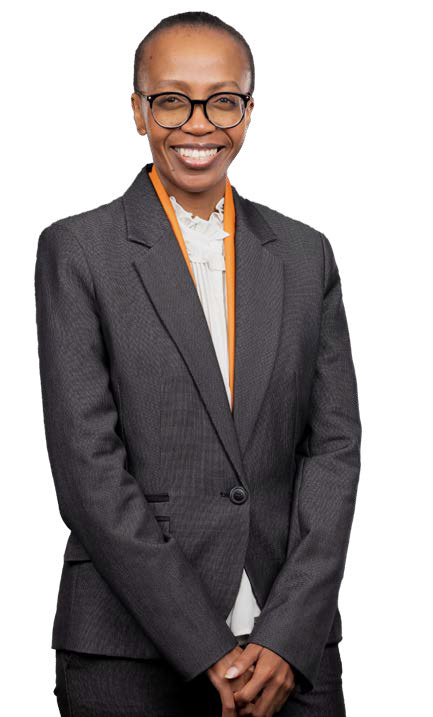

Message from our Chief Financial Office
Our 2026 financial year marked Cell C’s transition from a period of transformation and balance sheet restructuring to one of sustainable growth and value creation. Our successful JSE listing and significantly strengthened financial position provide a solid platform for our next phase of growth.
2026 at a glance
- Delivered on our financial guidance despite industry headwinds.
- Completed our IPO and significantly strengthened the balance sheet.
- Continued investing in technology, customer experience and future growth.
- Improved cash generation and liquidity position.
- Positioned the business to create long-term shareholder value.
Our financial performance is a testament to our resilient business model and effective strategy. Against a backdrop of muted economic growth and constrained consumer spending, we executed our strategy with discipline and delivered another year of meaningful progress. Despite operating in a mature and highly competitive sector, we achieved growth across our key revenue streams, maintained healthy profitability and continued to invest for the future.
Revenue increased 14% to R12 641 million (2025: R11 138 million), with growth across our key revenue streams. This performance was achieved despite the adverse impact of reductions in mobile termination rates (MTRs) on top-line growth, demonstrating the resilience and diversification of our earnings profile. The quality of our revenue base continues to improve, with growth increasingly driven by recurring service revenues and strategic growth segments such as Wholesale. Service revenue increased 6% to R11 641 million (2025: R11 019 million), primarily attributable to improved Wholesale revenues.
From a profitability perspective, the company delivered against guidance, with EBITDA increasing by 162% to R5 509 million (2025: R2 104 million), with an EBITDA margin of 44% (2025: 19%). This demonstrates the strength of our asset-light operating model and ongoing cost discipline. Excluding one-off IPO and restructuring-related items, our underlying EBITDA remained robust. EBITDA was positively impacted by a R3 531 million loan concession converted to equity and a R356 million net profit on lease termination. Earnings per share (EPS) decreased by 98% to 2 341 cents (2025: 148 537 cents), while HEPS decreased by 98% to 2 338 cents (2025: 148 507 cents).
Management carefully balanced strategic investment opportunities with the need to preserve liquidity and strengthen the balance sheet. Capital was allocated selectively to initiatives that support long-term growth while maintaining financial flexibility.
Condensed consolidated statement of profit or loss and other comprehensive income for the financial year ended 31 May 2026 (R'000)
| 2026 | 2025 | YoY | |
|---|---|---|---|
| Revenue | 12 641 318 | 11 138 167 | 14% |
| Other income | 4 875 215 | 1 319 077 | >100% |
| Direct expenses | (7 707 297) | (7 720 889) | 0% |
| Employee benefits expense | (992 450) | (818 183) | 21% |
| Depreciation and amortisation | (713 226) | (507 638) | 40% |
| Impairment loss reversal/(impairment loss) on trade receivables | (234 720) | (1 034) | >100% |
| Other expenses | (3 073 551) | (1 812 736) | 70% |
| Profit before net finance costs, equity-accounted profit and tax | 4 795 289 | 1 596 764 | >100% |
| Finance income | 13 134 | 11 032 | 19% |
| Finance costs | (778 737) | (1 311 740) | (41%) |
| Share of profit from equity-accounted investments | 73 | 434 | (83%) |
| Profit before tax | 4 029 759 | 296 490 | >100% |
| Income tax credit (expense) | 130 527 | 1 920 562 | (93%) |
| Profit | 4 160 286 | 2 217 052 | 88% |
| Earnings per share | |||
| - basic | 2 341 | 148 537 | (98%) |
| - diluted | 2 341 | 148 537 | (98%) |
Segment performance
We report performance for the company across four business lines: Prepaid, Postpaid, Wholesale and Other businesses with equipment sales as a non-service revenue element.
Service revenue (%)
Total revenue (%)
Prepaid
Prepaid revenue grew despite a largely stagnant segment, demonstrating the strength of our customer propositions and our ability to continue attracting and retaining customers. Revenue for our Prepaid business increased 10% to R5 809 million (2025: R5 294 million).
We report Prepaid revenues on a net basis, after discounts to the distribution channel. The materially higher-than-industry-standard discounts stem from historical bulk airtime purchase agreements with TPC. Following the completion of Cell C’s IPO and restructuring in November 2025, the legacy funding arrangements between TPC and Cell C were unwound, and TPC now maintains only normal trading levels of airtime inventory.
Prepaid subscribers grew by 1.3 million to 8.1 million, representing a strong recovery on the prior year’s performance and an ongoing focus on renewed customer growth. We experienced a strong improvement in gross additions coming predominantly from the informal channel. Prepaid ARPU at year-end was R71 (2025: R78), mainly reflecting a 9% effective reduction in data tariffs.
Postpaid
Postpaid revenue increased by 1.2% to R2 322 million (2025: R2 294 million). Postpaid subscribers grew by 0.5% to 0.8 million, reflecting a deliberate cleanup of the base, with ARPU increasing to R242 (2025: R225), as lower-value customers exited. This includes subscribers that were migrated from Postpaid to the Prepaid base; the low-value subscriber base is 15 200 are expected to continue migrating out of the Postpaid segment. Postpaid data traffic increased 99% year-on-year. Our growth ambitions in Postpaid are balanced by a prudent approach to credit risk management, with ongoing efforts to develop innovative and inclusive credit assessment capabilities.
We upgraded 44 Cell C stores, bringing the total to 79 out of 103. These store enhancements, the franchising programme and an improved in-store handset range are expected to support stronger growth in our Postpaid base. Importantly, through the acquisition and integration of CEC, the Postpaid business now has full internal control of its postpaid customer base, handset sourcing and billing. This will enable us to manage the end-to-end customer experience and create greater opportunities for future value creation.
Wholesale
Wholesale delivered continued double-digit growth, with revenue increasing 20% to R1 760 million (2025: R1 467 million), underpinned by sustained momentum in our MVNO business. Supporting our MVNO and wholesale partners is a strategic priority for Cell C and a key long-term growth driver, enabling us to scale through partner ecosystems while fostering increased competition, innovation and customer choice in the South African telecommunications market. At year-end, Cell C supported 5.7 million lines connected via our MVNO HLR, reinforcing the strength of our platform and our commitment to broadening access to differentiated offerings for consumers.
The continued growth of our Wholesale business validates our long-held belief that our partnership-led model represents a significant strategic opportunity. As demand for MVNO services accelerates, our experience, scale and partner-centric approach position us well to capture this opportunity.
Other
Revenue from Other businesses reduced by 11% to R1 750 million. The Other segment includes roaming revenue, incoming revenue, digital revenue, FTTH and Enterprise.
Revenue was negatively impacted by the regulated reduction in MTRs. The asymmetrical MTRs for Cell C reduced from 13 cents to 9 cents, effective 1 July 2025. From July 2026, MTRs were reduced further to 5 cents, which will place additional pressure on this revenue line in our 2027 financial year.
Roaming revenues related to our spectrum agreement are fixed, and, given their sizeable contribution to this segment, they limit the reported growth rate for the segment. Digital revenues declined by 12% to R30 million (2025: R35 million) due to changes we implemented to our agreements with wireless application service providers to improve the customer experience. While Enterprise remains a smaller part of the revenue mix, it represents an important growth opportunity for Cell C and is currently delivering double-digit growth, partially offsetting portfolio pressure.
Equipment
In prior years, given the historical relationship with CEC, we have accounted for equipment sales on the agent basis, with CEC being the principal. However, following the integration of CEC, we now report equipment revenues on a principal basis. Equipment revenue increased by more than 100% to R1 000 million (2025: R119 million). In the first half of our financial year, equipment sales were negatively affected by lower sales volumes and a decline in average handset selling prices. However, the stores upgrade programme and the wider range of handsets reversed this trend in the second half of our financial year.
Expenses
Total expenses increased year-on-year by 17% to R12 721 million (2025: R10 861 million). This was largely attributable to the consolidation of CEC R234 million and IPO-related costs of R351 million, comprising transaction expenses and cancellation fees for supplier debt settlements. The balance of the increase relates to strategic investments in people, technology and organisational capability, as well as higher marketing expenditure to support growth initiatives. Headcount at the end of the year was 914 (2025: 876), including 26 from CEC.
Higher IT spending was driven by the concurrent operation of legacy and newly implemented systems during the transition period.
Cell C operates with a deliberately lean organisational structure, and we remain focused on keeping our headcount low and realising operational efficiencies through technological innovation and improved processes.
Debt/gearing
The IPO and restructuring have fundamentally transformed our balance sheet. Through significant debt reduction, the conversion of shareholder debt into equity, and the simplification of legacy funding arrangements, Cell C has returned to positive equity and solvency. The stronger balance sheet provides greater financial flexibility, lowers future financing costs and establishes a solid platform for future growth.
At year-end, our net debt position was R2 020 million (2025: R5 691 million). This marked improvement is the result of the R3 531 million debt-to-equity conversions, and the R474 million lease settlement benefit net of the cancellation fee of R118 million. This was partially offset by the R1 351 million increase in banking facilities resulting from the CEC acquisition. This was an improvement of R369 million during the second half.
| Debt / gearing (figures in R'000 000) | 2026 | 2025 | YoY % |
|---|---|---|---|
| Net debt | (2 020) | (5 691) | (65) |
| Bank and cash balance | 133 | 182 | (27) |
| Current borrowings | (181) | (2 763) | (93) |
| Non-current borrowings | (1 972) | (3 111) | (37) |
| Net debt / EBITDA | 0.37x* | 4.29x | (91) |
* Second half 2026: 1.5
Net finance costs came in at R766 million (2025: R1 300 million), with R568 million in the first six months, then reducing to R198 million in the second half following the balance sheet restructuring and the conversion of debt into equity. With closing net debt at R2 020 million (including R802 million lease liabilities), down from R5 691 million at 31 May 2025, these finance costs are expected to reduce going forward.
Cash flow
Cash flow declined 27% to R133 million (2025: R182 million). Strong free cash flow generation is central to our value creation strategy. The substantial improvement in our balance sheet following the IPO and restructuring enhanced our ability to convert earnings into cash and deploy capital more effectively. Our immediate priority is to further strengthen liquidity and ensure that the company maintains sufficient financial flexibility to support strategic investment opportunities.
Working capital
We continue to actively manage working capital and liquidity. Although periods of constrained liquidity persisted during the year, we continued to honour all obligations while reducing reliance on external facilities.
The Group’s net working capital deficit improved by R7.7 billion to R1.4 billion at 31 May 2026 (2025: R9.1 billion). Current assets increased to R3.4 billion (2025: R1.2 billion), largely reflecting the consolidation of CEC and the resulting increase in trade and other receivables, inventories and customer advances. Current liabilities reduced to R4.8 billion (2025: R10.3 billion), following the listing transaction and the conversion or settlement of certain borrowings and contract liabilities.
While the reported current ratio remained below one at 0.7, certain current liabilities are settled through service delivery rather than cash or are subject to agreed payment arrangements. On an adjusted basis, we assessed the current ratio at approximately 1.2. Net cash generated from operating activities amounted to R1.6 billion (2025: R1.9 billion), supporting the group’s continued focus on liquidity and working capital improvement.
Tax
For the 2026 financial year, the total tax charge for the 12-month period was a gain of R131 million (2025: R1 921 million). Cell C has adopted a prudent stance on recognising a deferred tax asset for the year. The deferred tax asset at the year-end was R2 025 million (2025: R2 025 million), in line with the interim period. The company’s total potential deferred tax asset amounts to R5 billion, of which R2 billion has been recognised.
The company has estimated the probability of future taxable profits based on budgeted forecasts and the probable reversal of taxable temporary differences. Management was able to demonstrate with a high degree of certainty that the company will generate future taxable profits to utilise the unused tax loss, and it determined that the temporary differences would be utilised based on medium-term forecasts.
Capex
Our capital allocation decisions balance investing for future growth and maintaining financial resilience. In 2026, we made deliberate choices regarding where and when to deploy capital, prioritising investments that improve customer experience, strengthen our technology capabilities and support long-term growth, while preserving liquidity and enhancing balance sheet strength. Our capital allocation framework is anchored in creating long-term shareholder value. This year, investment was directed towards:
- Modernising and enhancing our technology platforms.
- Upgrading customer-facing systems and capabilities.
- Strengthening cybersecurity and resilience.
- Refreshing and repositioning our retail footprint.
- Supporting future growth opportunities across our core businesses.
A significant portion of our capex was invested in technology renewal and customer platforms, including enhancements to our Prepaid systems,
which provide greater flexibility and enable differentiated customer experiences. We are also beginning to realise the benefits of AI and automation and expect these capabilities to become increasingly important drivers of productivity and customer experience over time.
Our total reported cash capex was R810 million (2025: R778 million), of which R719 million was invested in technology and IT-related capex. This investment was focused on stabilising and modernising our technology estate. Key investments included:
- Major upgrades to the core network and capacity expansions.
- Transmission upgrades to support traffic growth.
- Strengthening core infrastructure and bolstering operational resilience.
- IT architecture enhancements to improve the resiliency of key services, including those supporting MVNOs.
- Replacing and upgrading power and cooling systems at our data centres.
- Data, analytics and automation capabilities to improve decisionmaking and enable greater efficiencies.
We allocated capex to leases of R337 million (2025: R137 million), mainly due to the renewal of a significant lease agreement and additional network and equipment leases entered into during the second half of the year. A second half adjustment was also recorded to correct the recognition of a lease modification relating to the office building lease renewal recognised in the first half.
| Capex R'000 000 | 2026 | 2025 | YoY % |
|---|---|---|---|
| Technology | 719 | 587 | 22 |
| Lease | 337 | 137 | > 100 |
| Other | 92 | 55 | 68 |
| Capex in line with the cash flow statement | 1 147 | 778 | 47 |
| Capex intensity | 6% | 7% | 1 |
Outlook and priorities
We enter 2027 with a stronger balance sheet, improved operational momentum and significant opportunities across our business. Our priorities remain clear: deliver sustainable growth, strengthen liquidity, generate strong free cash flow and create long-term shareholder value.
Local consumers continue to face financial pressure, exacerbating increased switching behaviour across our sector. At the same time, rapid technological change, evolving customer expectations and needs, and increasing regulatory requirements are reshaping the industry. The geopolitical environment also presents uncertainties, particularly regarding global supply chains and potential impacts on technology and handset costs. These trends also create opportunities. Greater openness to trial, growing demand for digital services and changing consumer preferences all support our challenger positioning.
As we enter our first full year as a listed company, we remain focused on disciplined strategic execution and delivering on our promises to stakeholders. While the local telecommunications sector is mature, we believe that Cell C is well-positioned to achieve continued growth by addressing customer pain points, leveraging strategic partnerships and delivering differentiated propositions. We see significant growth opportunities in several areas of our business, including:
- Further expansion of our Wholesale business, including through MVNO partnership growth.
- Growing our Postpaid subscriber base, supported by the CEC integration and targeting higher-value segments.
- Equipment revenues, following the consolidation of CEC.
- Scaling our Enterprise solutions through business development activities.
- Launching and growing our 5G and fixed wireless propositions.
- Enhancing our customer experience.
While there is still much work ahead, we have established strong foundations, built momentum and repositioned the business to deliver sustainable growth. In the coming year, we seek to improve our profitability and margins, pursue disciplined capital allocation, maintain a resilient and efficient balance sheet and further strengthen our liquidity and free cash flow. The Board intends to consider shareholder distributions over time, subject to earnings, free cash flow generation, solvency and liquidity requirements, investment opportunities and the company’s approved dividend policy.
Appreciation
I thank my finance team and colleagues for their exceptional commitment to achieving our successful listing. Preparing for our listing required an extraordinary company-wide effort. Despite a tightly compressed timeframe, our teams successfully executed a complex balance sheet restructuring, strengthened governance and reporting frameworks and prepared the business for life as a listed company, all while maintaining operational momentum and delivering against our strategic objectives. The process demonstrated the resilience and dedication of our people and has established a strong foundation for our next phase of growth.
I also thank our customers, partners, lenders and shareholders for their steadfast support and confidence in Cell C. Their commitment and belief in our journey have been instrumental in our turnaround.

EI Kope
Chief Financial Office
30 September 2026